
Modern patio furniture tends to have clean lines, low profiles, and simple materials such as powder-coated metal, teak, rattan-look weave, and neutral upholstery. The floor beneath it matters as much as the furniture itself. The right surface can make a small courtyard feel larger, make a compact terrace feel intentional, and give a minimalist setup some warmth. The wrong one can look cluttered or feel uneven under chair legs.
This guide walks through seven outdoor flooring ideas that pair well with contemporary outdoor furniture. Each one covers how it looks, what it does well, and where it can fall short. A comparison table near the end helps narrow the choice.
Table of Contents
- 1. Warm Timber Decking
- 2. Hexagonal Stone Pavers
- 3. Natural Stone Flagstones
- 4. Aluminium Decking for a Sleek Finish
- 5. Stone-Look Lounge Zone With a Central Firepit
- 6. Classic Brick Patio
- 7. Gravel Borders With Large-Format Tiles
- Choosing the Right Flooring for Your Patio
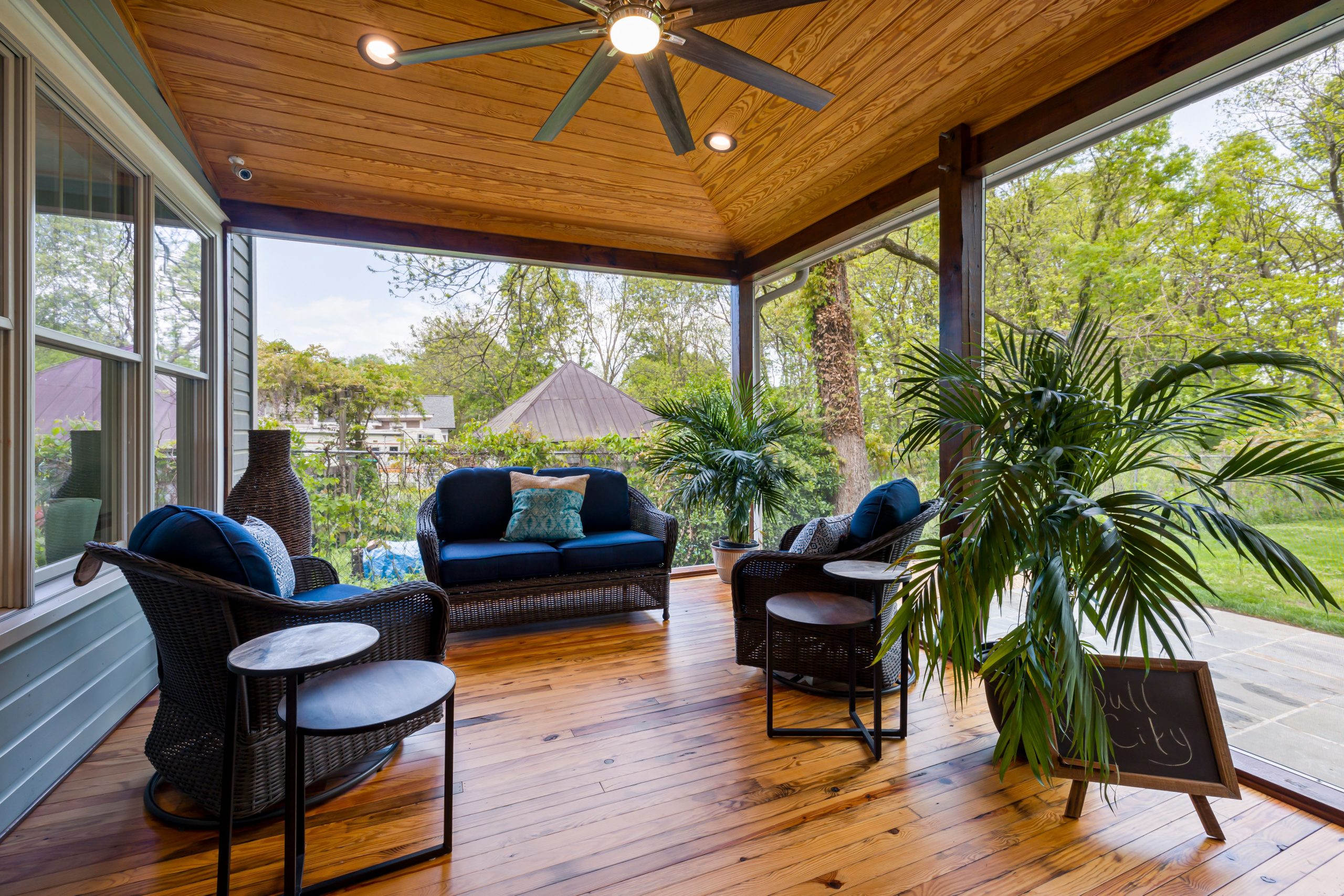
1. Warm Timber Decking
Timber is one of the easiest ways to soften modern furniture. Metal frames and crisp cushions look striking on a natural wood surface, and the contrast reads as deliberate rather than busy. Wood also suits a raised terrace that opens onto a garden or wooded view.
- Best for: sloped gardens, raised decks, and spaces that open to nature
- Strengths: warm colour, comfortable underfoot, easy to shape into different layouts
- Watch for: regular sealing or staining, and gaps between boards that can catch small items
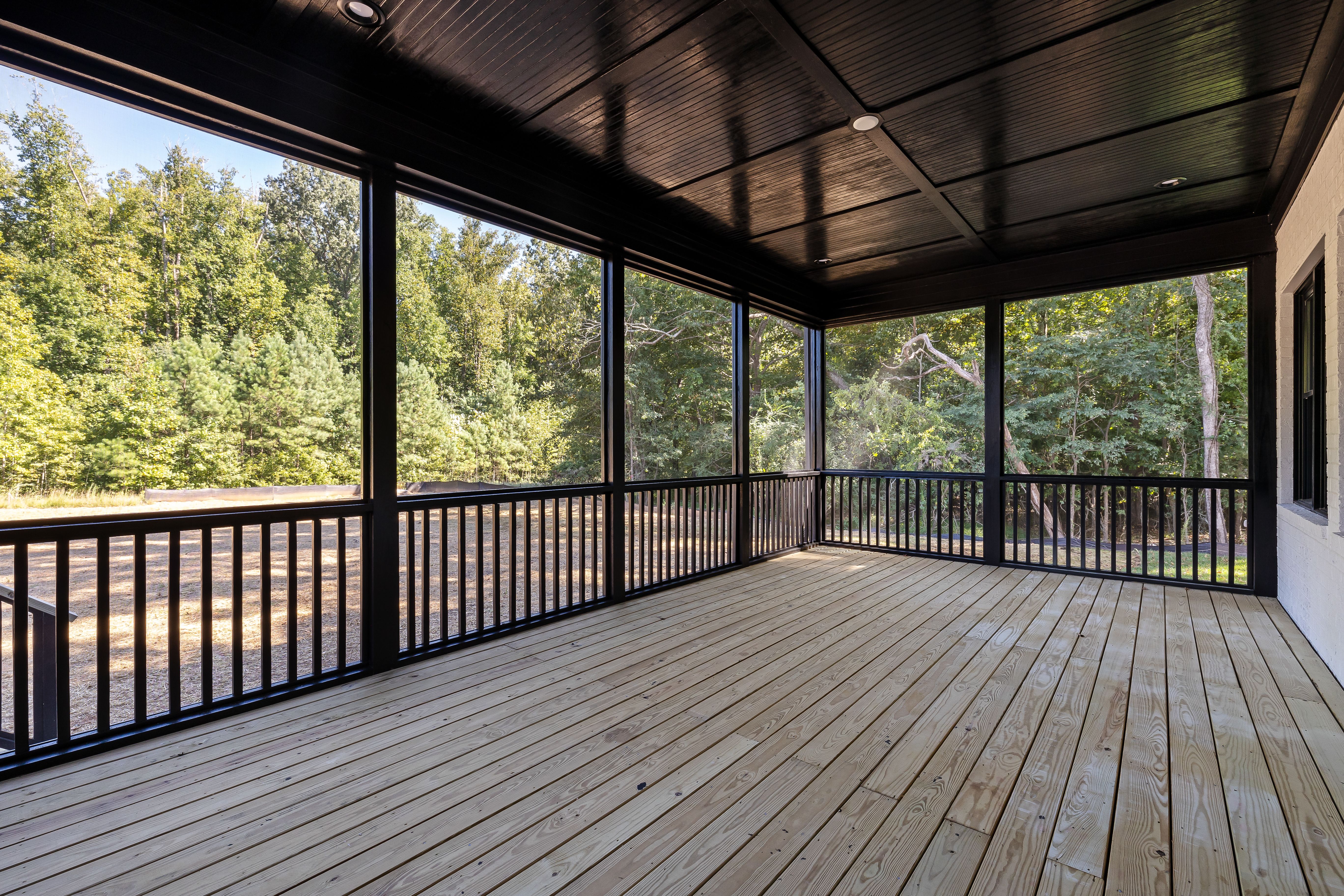
Choose a lighter or mid-tone species for a contemporary look. Very dark stains can make a minimalist space feel heavy, especially under black or charcoal furniture.
2. Hexagonal Stone Pavers
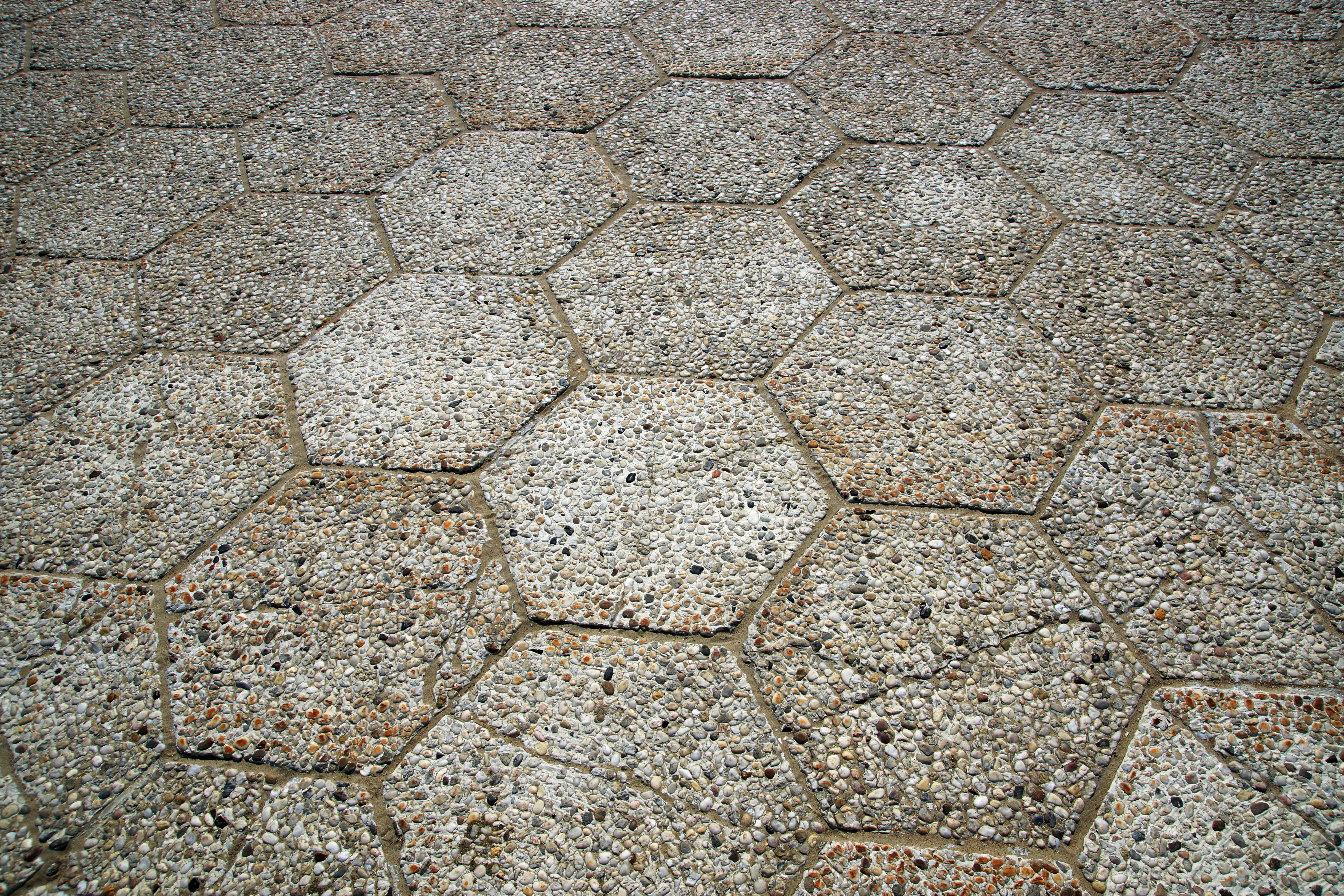
Geometric paving adds visual interest without adding clutter. Hexagonal stone pavers have a graphic quality that suits modern furniture, particularly pieces with rounded or sculptural shapes. Because the pattern is strong, it works best with fairly simple furniture so the floor does not compete with it.
Look for pavers with a slightly textured or honed finish. Polished surfaces can become slippery when wet and show water marks in direct sun. Consider the following when planning a hexagonal layout:
- Use a light grout line for a clean, graphic effect
- Keep the pattern away from edges where furniture will be dragged
- Confirm the base is compacted properly so the surface stays level
3. Natural Stone Flagstones
Natural stone brings an organic, softer look that balances hard-edged furniture. Irregular flagstones are a good match for a relaxed modern garden, where the stone pattern feels informal and the furniture provides the structure. Stone also stays cool in warm weather and does not fade in sunlight.
The drawbacks are cost and installation. Large stone pieces are heavy, and a poor base can lead to rocking or uneven surfaces. Family Handyman’s homeowner’s guide to patio flooring explains how much variation there can be between flagstone, pavers, and poured concrete, and why base preparation matters so much.
4. Aluminium Decking for a Sleek Finish
For a sharp, contemporary look, aluminium decking is one of the most direct matches for modern outdoor furniture. Its clean profile and uniform colour suit minimal layouts, and it does not rot the way timber can. Some systems also use interlocking boards with water management features underneath.
- Strengths: low routine maintenance, strong for its weight, consistent appearance
- Trade-offs: higher upfront cost, a different feel and sound underfoot, and a surface that can heat or cool quickly with the weather
Aluminium works especially well with powder-coated frames in black, graphite, or white. Matching the decking tone to the furniture frame can make the whole space look like one designed set.
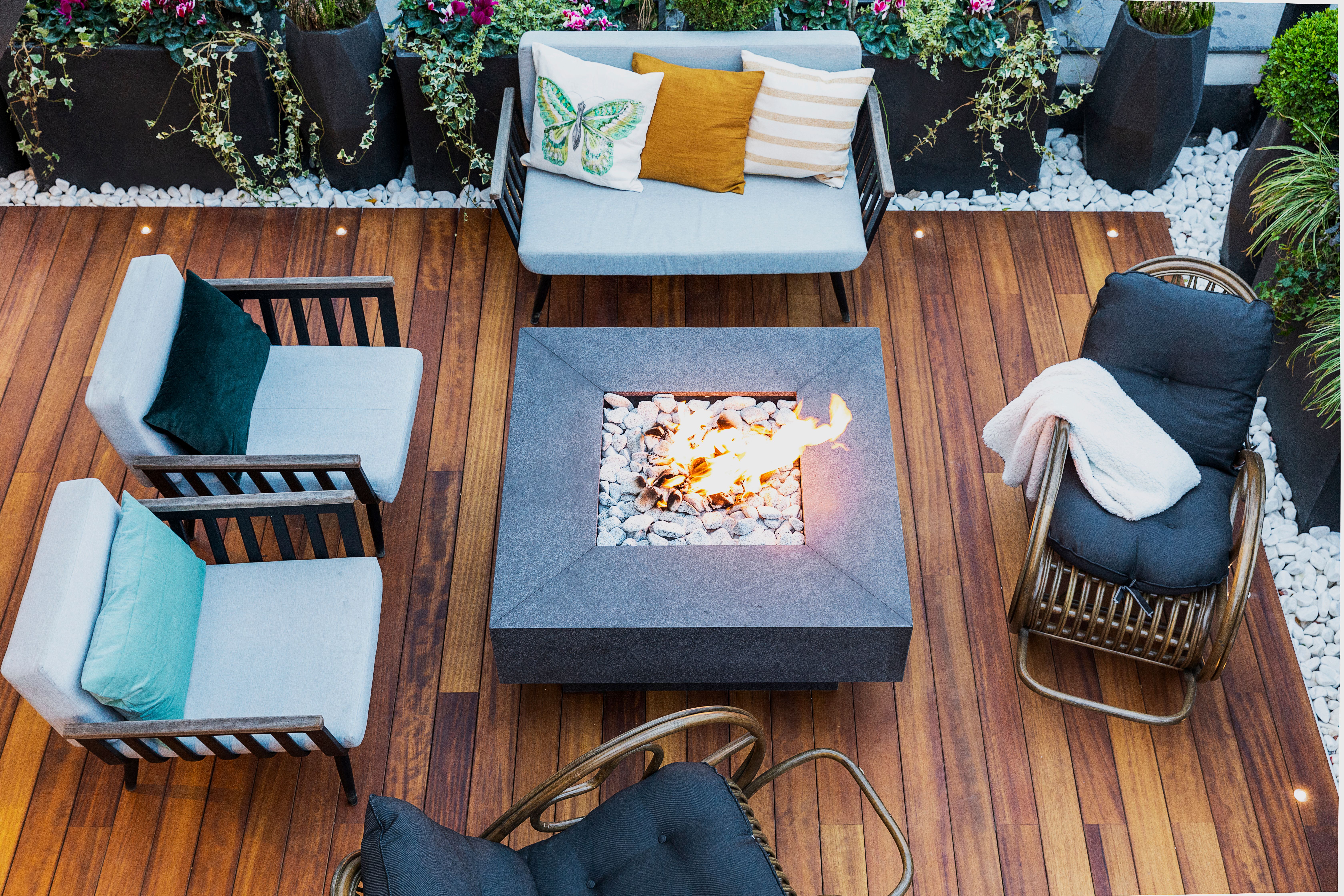
5. Stone-Look Lounge Zone With a Central Firepit
Many modern patios are built around a single focal point, often a firepit surrounded by low seating. In this setup, the flooring should frame the firepit rather than fight it. A large, consistent surface in a neutral stone tone keeps the eye on the centre, and a clear border defines the lounge area.
Heat-resistant materials matter near a firepit. Choose a flooring that tolerates temperature changes, and keep combustible furniture cushions a safe distance from the flame. Ask the installer to check how the surface handles spark and ash cleaning.
6. Classic Brick Patio
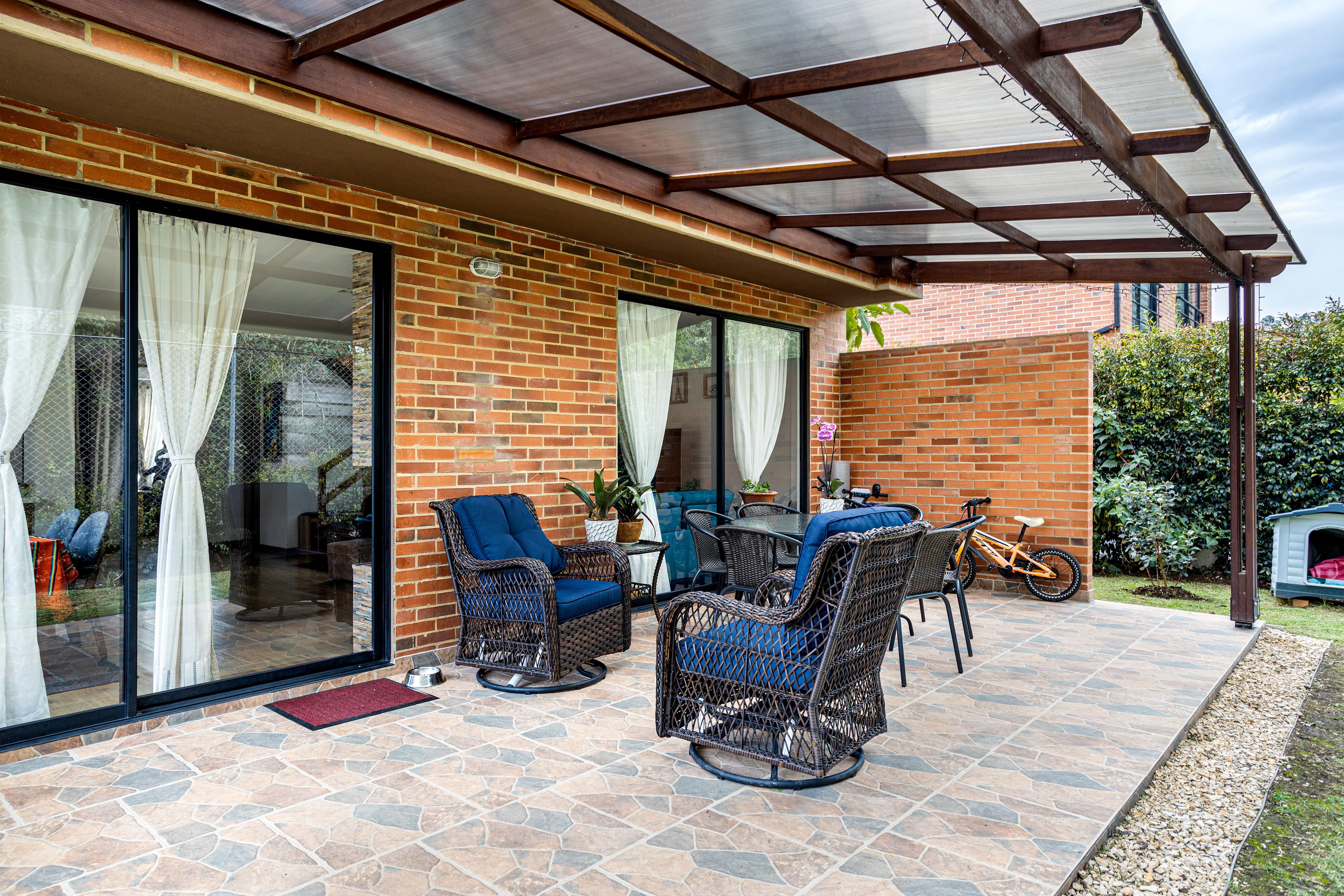
Brick brings warmth and a traditional character to a contemporary space. Its earthy colour contrasts well with pale or woven furniture, and the small units create a texture that feels human-scale. Brick is a good option for patios that face a house with brick walls, because the materials visually connect.
Brick is porous, which helps drainage, but it can crack in freezing conditions and may collect moss in shaded areas. Plan for periodic cleaning, and choose a frost-resistant brick if you live where winters are cold.
7. Gravel Borders With Large-Format Tiles
A hybrid approach can work well for modern spaces. Large-format porcelain or concrete tiles create a solid, level area for furniture, while gravel borders or planting strips soften the edges and add a sense of depth. The tiles keep chairs and tables stable, and the gravel adds texture without requiring a full paved surface.
- Large tiles reduce the number of grout lines, which makes the floor look calmer
- Gravel edging should be contained by metal or stone so it does not spread onto the tiles
- Keep the gravel tone close to the tile colour to avoid a busy look
The approach suits small to medium patios where furniture should sit on a firm, level base. For background on how different hard surfaces compare, Homes and Gardens’ guide to patio materials offers a clear overview of common options and their trade-offs.
Choosing the Right Flooring for Your Patio
No single material suits every space. Consider how the patio will be used, how much maintenance you are willing to do, and the climate where you live. The table below summarises how each option tends to work with modern furniture.
Before buying, order samples and place them outside. Colours shift considerably between indoor showroom lighting and full sun. Test a sample with the furniture you already own, and check how the surface feels when wet. A floor that looks elegant in photographs but becomes slippery after rain is not a good fit for daily use.
Whichever option you choose, the goal is balance. Let the flooring provide a calm, consistent base, and let the furniture carry the personality. When the two work together, a modern outdoor space feels deliberate, comfortable, and easy to live in through every season.